Research before pixels
Each product starts from a persona grounded in published research. The learning platform also drew on a short survey.
Royal Holloway · Final report 2026
Three web-based interfaces for children with learning differences, older adults accessing healthcare, and women with visual impairments shopping for clothing. The same HCI theories run through all three, but they are applied differently for each audience — not as one set of rules for everyone.
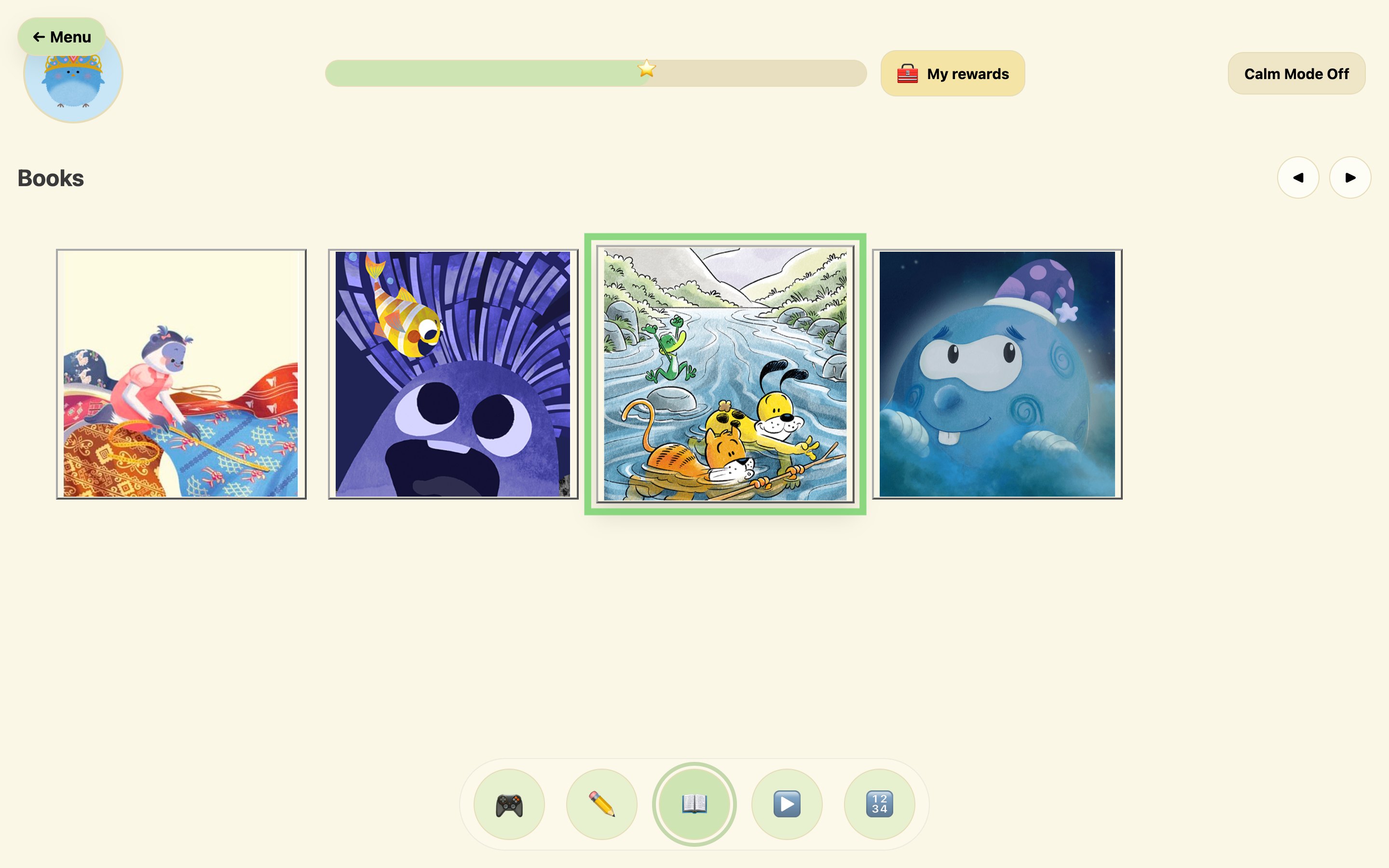
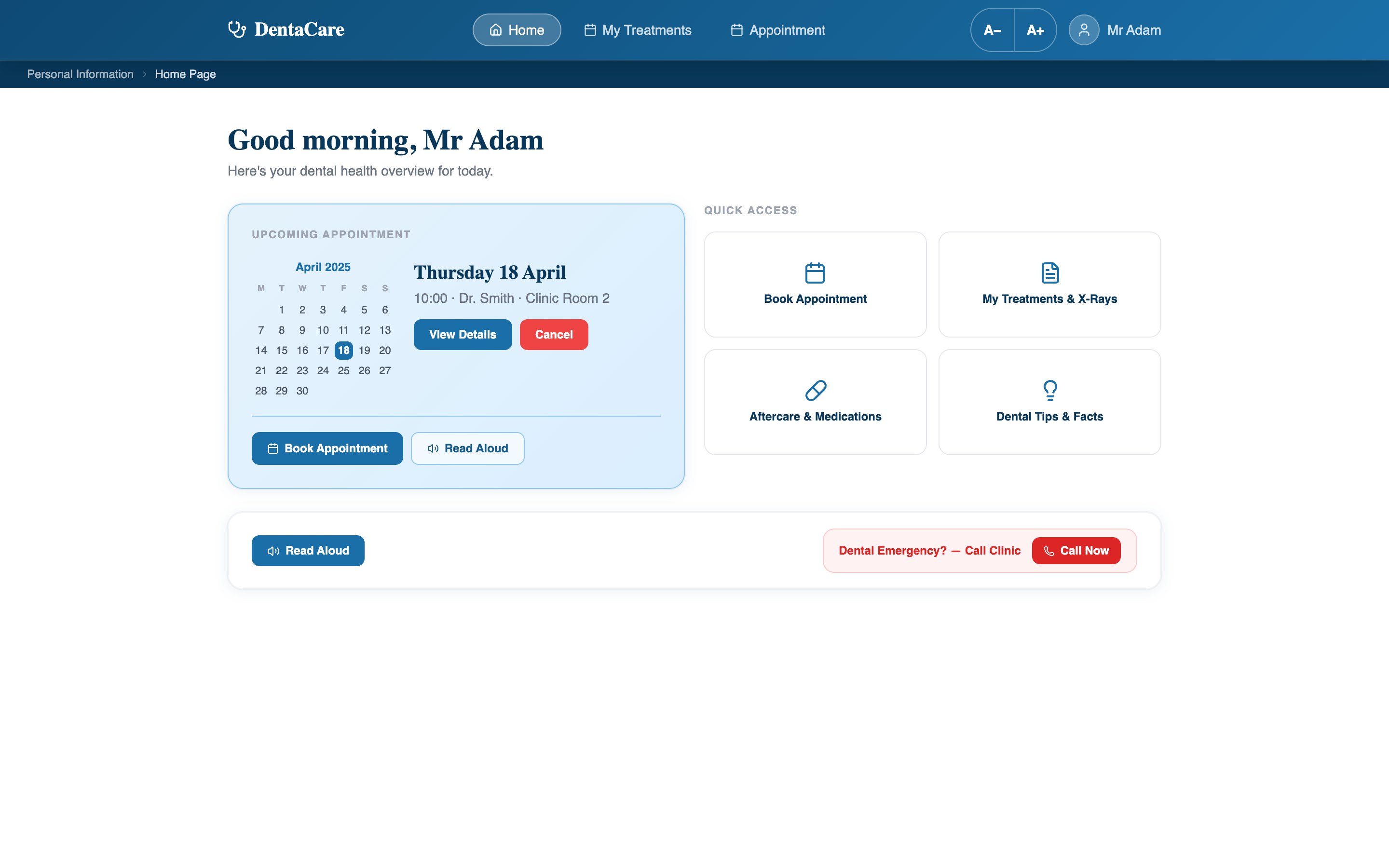
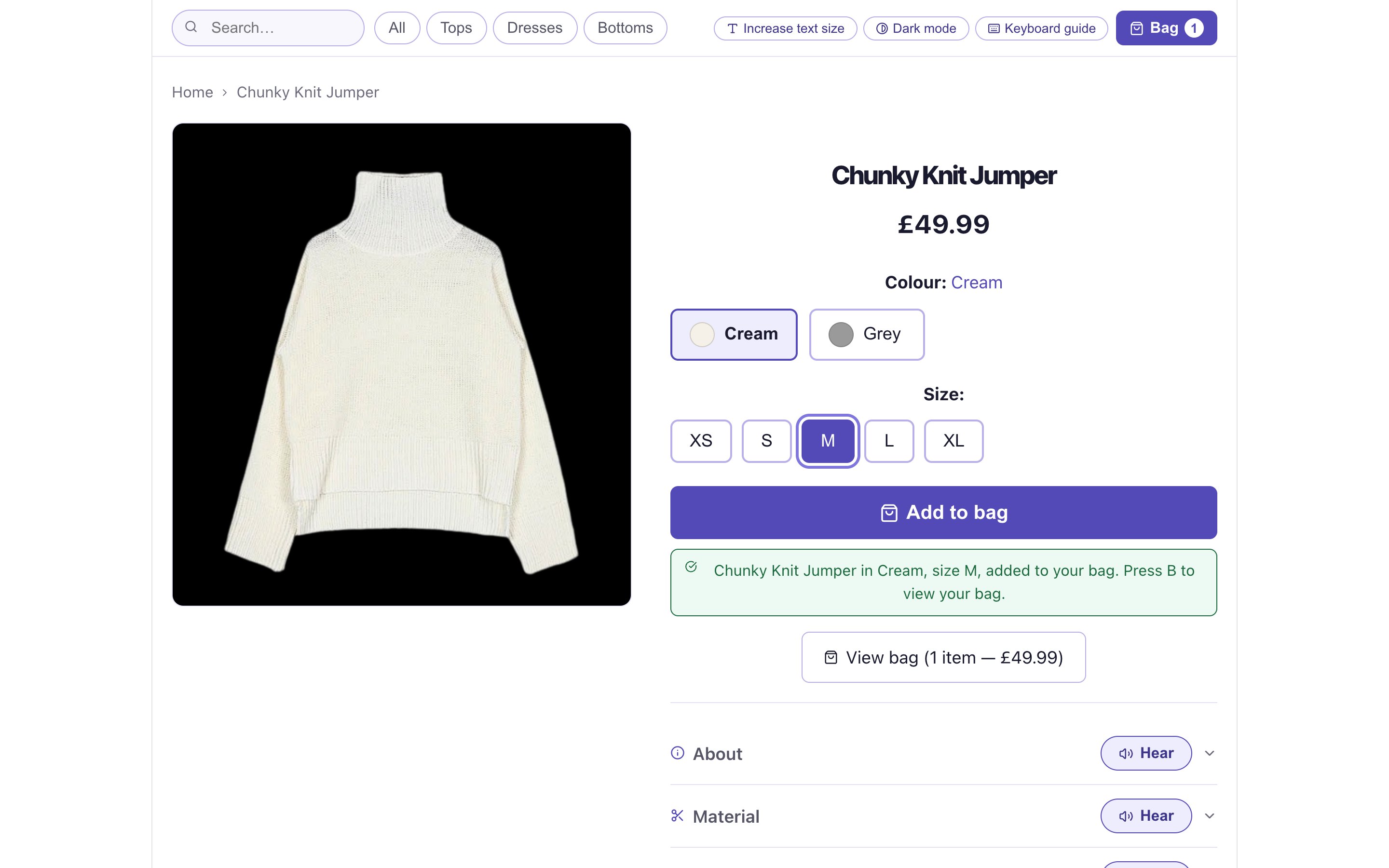
Sarah Menla Supervisor Tiger-Lily Goldsmith BSc (Hons) Computer Science Royal Holloway
A low-stimulation, gamified learning platform for children aged 5 to 9, including autistic children. Books, videos, maths games and drawing, with rewards the child owns and a one-tap Calm Mode.
A patient portal for adults aged 65 and over. Appointments, treatment history, notes and X-rays in one place, with Read Aloud and an emergency call on the first screen.
An e-commerce platform for women with visual impairments, built for keyboard and screen reader use first: named colours and sizes, fabric and fit in words, and every action announced.
Approach
Each product starts from a persona grounded in published research. The learning platform also drew on a short survey.
Hick’s and Fitts’s Laws, Nielsen’s heuristics, Gestalt principles, cognitive load theory and WCAG 2.1 justify each decision.
Fewer, calmer choices for children; larger targets and plain language for older adults; everything in words for women with visual impairments.
The learning platform’s tasks were tested with three adult proxies, after a short survey of four children. DentaCare had a heuristic review, and the e-commerce platform a heuristic review and a WCAG 2.1 audit.